 Fish Eat Fish
Fish types in Lantern Shoal
Fish Eat Fish has ten playable forms. Compare body lengths for the next bite. A big sardine can eat a smaller wild sardine. A wild fish the same size as yours passes safely, and friends sharing a keyboard can always cross paths. Your body grows between transformations. When a smaller fish crosses your mouth, you take a bite. One that slips past your tail gets another chance to escape.
The plankton nursery
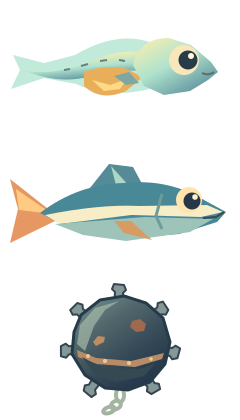
Glass larva. Follow the bright eye on the clear, tapering body. Its warm yolk sac is easier to spot than its tail. A single speck of plankton waits ahead of each swimmer. Turn into open water for the next meal. Six bites carry you to the anchovy stage. Even the smallest school fish enters this part of the cove longer than a larva.
Anchovy fry. A silver stripe runs from the forked tail to the eye. This is your first chance to cut across a school for a fish meal. Individual fish vary in length. Pick a short one and approach from its flank. Plankton is still worth collecting between intercepts.
From lantern fry to mackerel
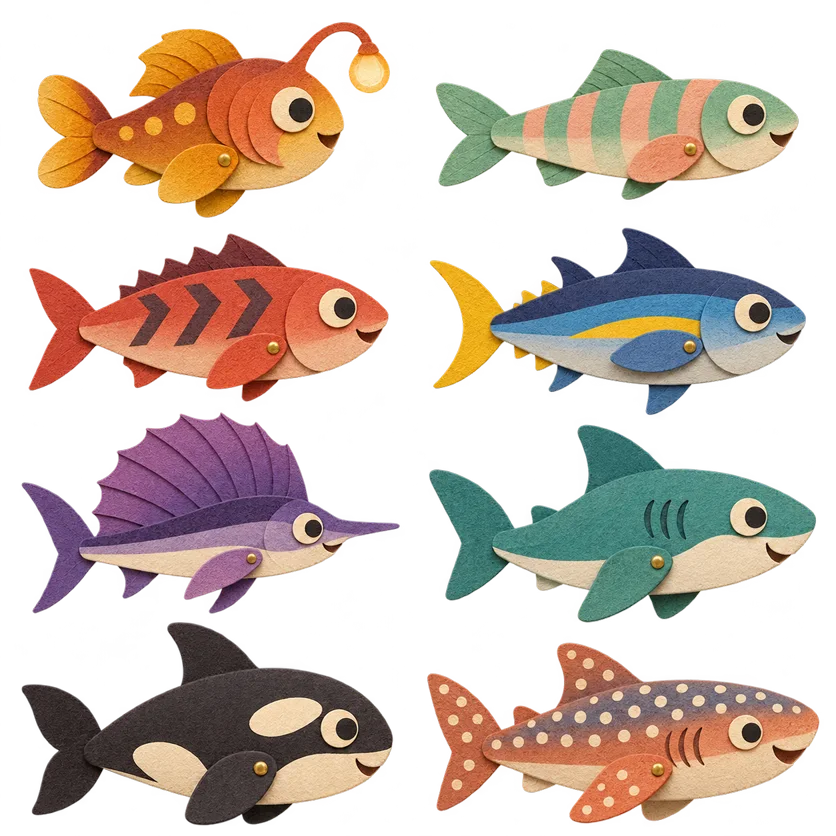
Lantern fry. Look for the light hanging over its nose and the large round eye. Reaching the lantern fry restores one missing heart. It can cruise faster than an anchovy. Hold back a little dash for the escape after a crossing catch.
Sardine. The pale flank and compact tail make the fourth form easy to pick out. A sardine gets a little more speed without giving up much of the fry’s turning ability. Try two short intercepts across a school instead of circling behind its last member.
Mackerel. Its back carries dark chevrons. This is the first form with enough body length to catch the original ribbon rival at full size even just after transforming. Look for those two loose gold streamers. At full size, a mackerel can also set off the iron mine. While a shrink charm is active, it bounces off.
Open-water swimmers
Bluefin tuna. The crescent tail belongs to the fastest cruiser. Turning through a crowd is harder at this speed. Look past your next meal before starting a dash.
Sailfish. The raised sail gives this fish a taller silhouette. Let your bill slide past the prey until the small jaw under it meets the fish. A sailfish changes direction faster than the bluefin. Use that difference to meet a school crossing the middle when a hunter is coming up behind you.
Reef shark. Broad shoulders and a long profile carry a longer burst. Decide on the exit before you charge toward an edge. Dash across the school once, release and turn back on a wider line.
The last two forms
Orca. The white patch behind the eye identifies this marine mammal. The orca cruises a little faster than the reef shark and takes longer to reverse. Many young fish offer an easy bite, but following a single one into a corner can leave you nose-to-wall when the mine starts ticking.
Whale shark. A broad head and spotted back mark the final form. This giant cruises more slowly than the orca and has the widest turn. Swimming a broad arc through crossing traffic makes better use of its body than doubling back for plankton. The ocean keeps running after this transformation. Continue for another ribbon, or surface with your pearls.
The Field guide inside the pause menu shows these same paper fish during a dive. Play Fish Eat Fish or practice catching a ribbon fish.
Compare two fish in motion
The size that counts is the body you see right now. A little mackerel can swim past a larger sardine. The stripes tell you which paper character you are seeing, while body length tells you whether to close the gap. A gold ribbon adds streamers behind the tail. Compare the body itself when deciding whether that particular rival has become prey.
Watch for a change in scale partway through a form. A few meals can make your swimmer noticeably longer before the next portrait appears. The amber strip shows progress to the next transformation. If a little fish crosses your mouth and a number rises, you have already gained the meal and can turn back toward another. You can compare your new size without waiting for an introduction.
A shrink charm temporarily changes that comparison. The portrait and species name stay the same while your body gets shorter. A full-sized mackerel and a shrunken mackerel can have very different encounters with the same ribbon rival. Look at the hull of the other fish once more after a charm runs out. The change back happens during the dive.
Match the turn to the form
Try a sweeping return past the drifting iron mine with the lantern fry, sardine and mackerel. With the lantern fry, you can swing the nose around close to its casing. The sardine carries slightly more speed into the same turn. Both can brush the casing safely, though a passing hunter can still light the fuse beside you. Start your turn sooner with a mackerel. It closes the gap faster, and contact will start the countdown.
With a bluefin or larger swimmer, practise the same turn farther from the drifting float. The crescent-tailed bluefin is especially good at crossing the width of the cove, so choose its exit as you begin a dash. At the other end of the chain, the whale shark gains more by keeping a smooth line across an incoming group. Give that wide head time to turn after the meal.
Read the field guide during a run
Pause and open Field guide to see the whole collection in order, even if your current dive is still at the glass larva stage. The in-game portrait shows a character and a short identifying trait. A discovery card also freezes the ocean when it opens. Look at the markings, choose Continue swimming and the same fish will be in the same place when play resumes.
You can skip future introductions for the visit without changing how forms unlock. Eating still advances the amber strip and changes your body, speed and turning circle. The ten portraits remain available from the pause menu whenever you want another look.